

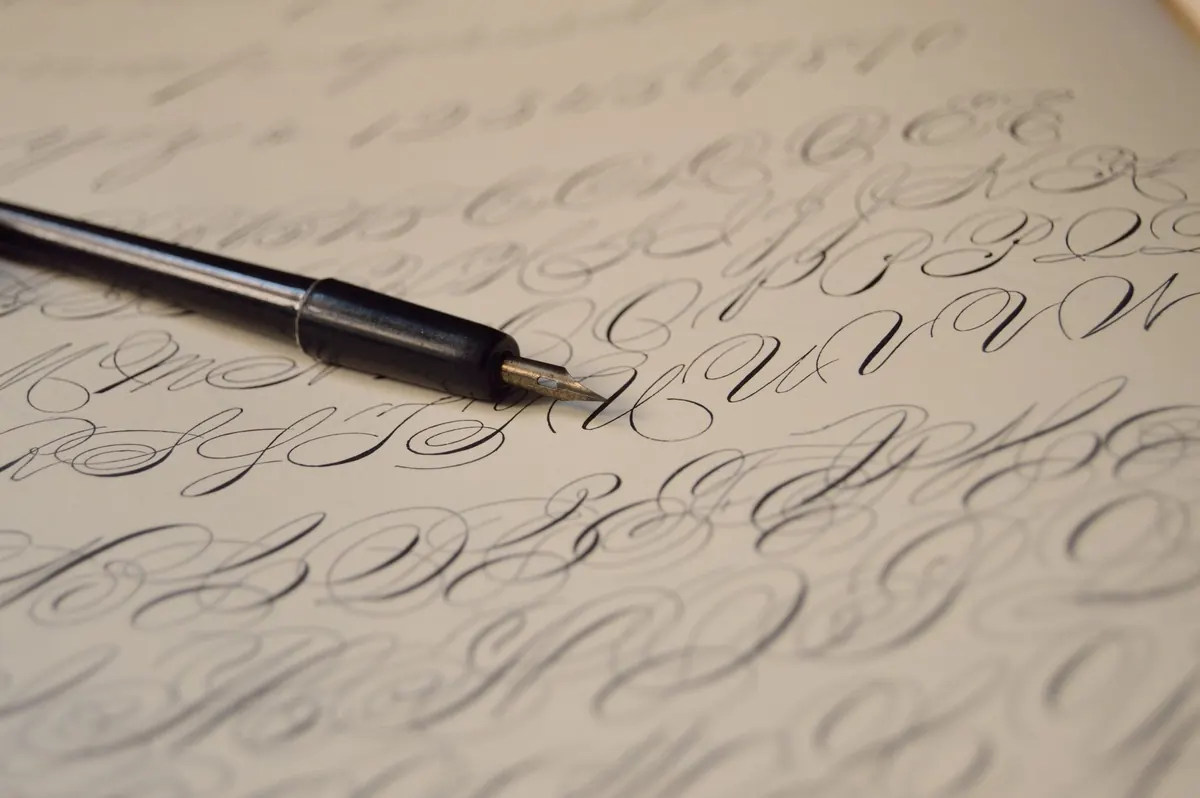
Buying a first fountain pen is mostly a matter of answering three questions: how small do you write, what will you write on, and how much fiddling are you willing to do? Get those roughly right and even an inexpensive pen feels like a small luxury. Get them wrong and a beautiful pen will sit in a drawer, unfairly blamed.
Start with the nib, not the barrel
The nib decides how much ink reaches the page, so it shapes everything else: how your handwriting reads, how long a fill lasts, and whether the ink soaks through your notebook. Choose the nib first and pick the body second.
What the sizes actually do
- Extra fine and fine. A thin, restrained line. Best for small handwriting, forms, margin notes, cheap paper and left-handers whose hand travels over wet ink.
- Medium. The all-rounder, and the size most pens ship with. Comfortable for most handwriting, showing a little of an ink's colour without flooding the page.
- Broad. Wetter and wider. It flatters bold handwriting and reveals ink shading, but it also reveals every wobble and empties a cartridge faster.
- Stub and italic. A flat tip that gives thick downstrokes and thin sidestrokes. Great fun, but they demand a consistent pen angle, so they make a poor first nib.
A rule of thumb worth knowing: Japanese nibs (Pilot, Platinum, Sailor) run about one grade finer than European ones at the same label, so a Japanese medium often feels like a European fine. If you can, try before you buy, or buy from a retailer that allows a nib swap.
Nib material matters less than beginners expect. Steel nibs on good entry-level pens are smooth and reliable; gold nibs are springier and considerably more expensive. Start with steel.
Ink, and how you get it into the pen
Most starter pens accept small cartridges, which are clean, portable and quick to swap. The catch is that many are proprietary, so the cartridges only fit that brand. A converter — a refillable tube that replaces the cartridge — lets you draw ink from a bottle instead.
Bottled ink works out cheaper per millilitre, comes in hundreds of colours, and is the reason many people stay with fountain pens. A piston-filling pen builds the reservoir into the barrel and holds more ink, but it is harder to clean out between colours.
Three ink types to understand
- Standard dye-based ink. Forgiving, widely available, easy to flush out. The sensible starting point.
- Waterproof and pigment ink. Permanent on the page, which suits signatures and labels, but it needs more frequent flushing to stop the pen clogging.
- Shimmer and heavily saturated ink. Beautiful in a sample swatch, prone to settling and blocking fine nibs. Leave these until you have a routine.
Never fill a fountain pen with India ink, calligraphy ink or drawing ink sold in a dip-pen bottle. Those contain shellac or similar binders that set solid inside a feed and can ruin the pen. Fountain pen ink only.
Paper is half the experience
A scratchy, feathering line is usually the paper's fault, not the pen's. Absorbent paper wicks ink sideways, so letters grow fuzzy edges and ink shows through to the other side. Smooth, coated or well-sized paper keeps the line crisp and lets shading and sheen appear.
Look for notebooks of 90gsm or above with a coated finish. Rhodia, Clairefontaine, Leuchtturm1917, Midori MD and Oxford's Optik paper all behave well with fountain pens, and Oxford notebooks are easy to find on the high street. Copier paper is the usual culprit behind disappointing first impressions, so keep a decent notebook for pen testing.
If you must write on thin paper, use a finer nib and a drier ink, and slip a sheet or two underneath your hand to give a firmer surface.
The things a specification sheet won't tell you
Weight and balance decide whether you reach for a pen daily or leave it at home. Anything much over 30g starts to feel heavy in a long session; lighter plastic pens disappear into the hand. Many pens are designed to be used with the cap posted on the back, which shifts the balance backwards — try both before deciding you dislike a pen.
Check the grip section too. Shaped grips, such as the one on the Lamy Safari, encourage a particular hold and suit some writers enormously while annoying others. Metal sections can feel slippery if your hands are warm. A snap cap is quicker for note-taking; a screw cap seals better and is less likely to dry out.
Starter pens worth a look
Several pens have earned their reputation as first purchases, and any of them will serve you well. The Lamy Safari and AL-Star are robust with easily swapped nibs; the Pilot MR and Kakuno are smooth writers that take cartridges or a converter; the Platinum Preppy and Plaisir are inexpensive and seal exceptionally well; the Kaweco Sport is pocket-sized with a screw cap; and the TWSBI Eco is a piston filler if you already know you want bottled ink.
Buy from a stationer or pen specialist rather than a marketplace listing, and ask whether the nib can be exchanged. A retailer who will swap a nib for a small fee saves you from being stuck with the wrong one.
Breaking it in and keeping it alive
- Flush a new pen with lukewarm water before its first fill. This clears manufacturing residue and prevents a hesitant start.
- Write with no pressure at all. A fountain pen lays ink down under its own weight; pressing splays the tines and makes the nib scratchy.
- Cap the pen whenever you pause. Ink dries in an uncapped nib within minutes.
- Flush with water every few weeks, or whenever you change ink colour, and dry the nib on a tissue before refilling.
- Store it nib-up, and don't lend it to anyone who writes with a heavy hand.
Your first pen, step by step
Write a paragraph with a pen you already like and look honestly at the size of your letters. If they are small or cramped, choose a fine or extra-fine nib; if you write large and fast, or you simply aren't sure, a medium is the safer choice. Decide whether you want the convenience of cartridges or the range of bottled ink, and buy the matching converter if you're undecided.
Then buy one notebook you're happy to write in, fill the pen, and use it for a fortnight before judging it. Fountain pens reward a little patience at the start: the nib settles, your grip softens, and the pen stops being a novelty and becomes the thing you reach for. If it still isn't right after two weeks, change the nib or the ink before you blame yourself — the variables are small, and each one is easy to adjust.
Photo: Miguel Á. Padriñán / Pexels