
There is a particular kind of paralysis that arrives just after you sit down to write. The document is open, the cursor blinks, and you have firm opinions about commas but no sentences. Writer's block is rarely a shortage of words. More often it is a traffic problem: the editor has reached the desk before the writer. Morning pages exist to change the order in which the two arrive.
What morning pages actually are
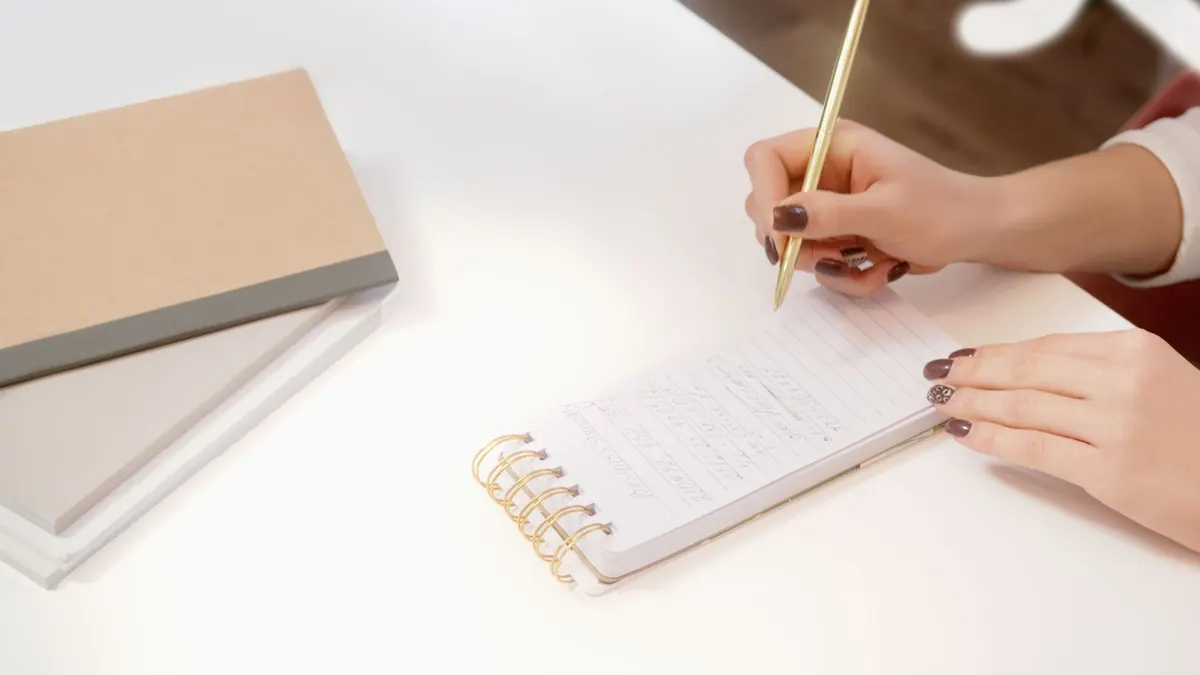
The method comes from Julia Cameron's The Artist's Way, and the rules are deliberately plain. First thing in the morning, before email and before the news, you write three pages by hand. Longhand, not typed. You keep the pen moving and do not stop to plan, correct or improve anything. You do not read them back for weeks, ideally for months.
Three sides of A4 is roughly 750 words, or twenty to thirty minutes. That is the whole instruction. There is no prompt, no theme and no reader. The pages are not a diary entry or a draft. They are where the unedited version of your thinking is allowed to exist for a while.
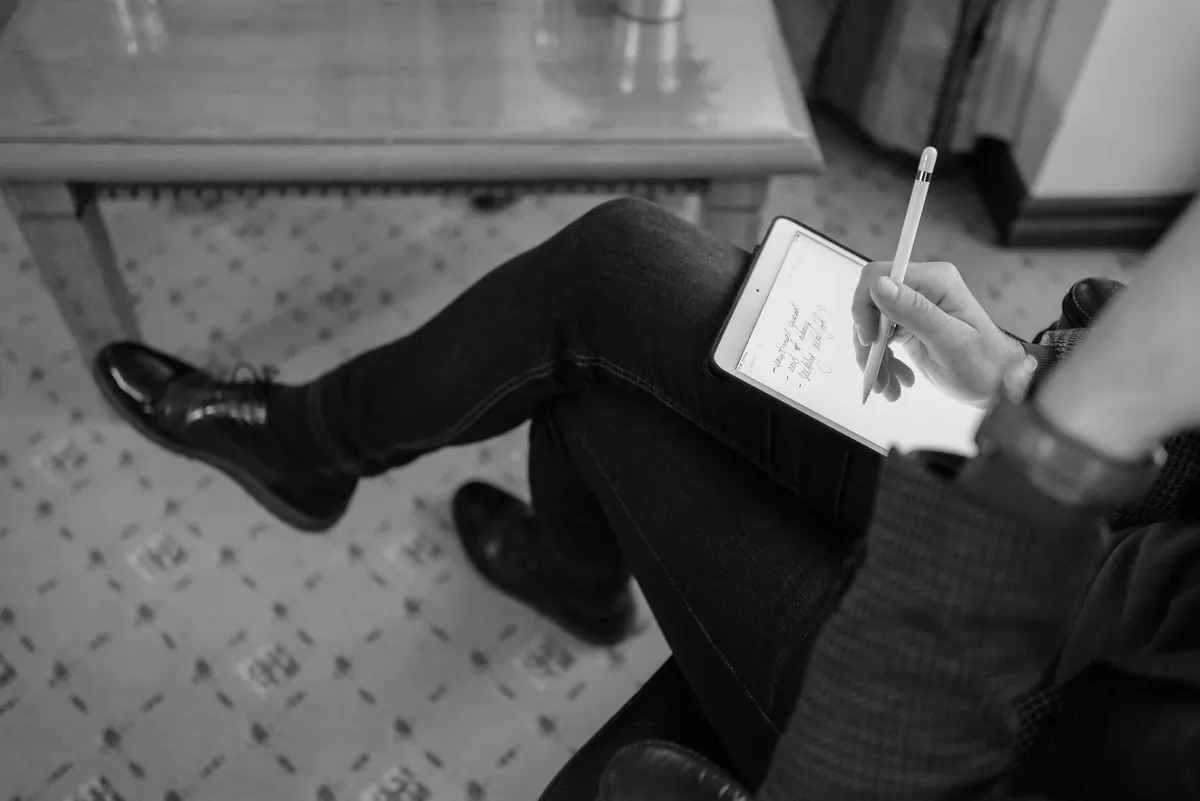
The handwriting is not nostalgia. Typing invites the backspace key, and the backspace key invites the editor back into the room. A pen cannot delete, so the only way forward is forward — which is precisely the muscle a blocked writer has forgotten how to use.
Why it helps when you are stuck
Blocked writing is usually a sorting problem. You are trying to generate and judge in the same breath, and the two jobs fight each other. Morning pages separate them.
- Generating happens on the page, fast and unpolished.
- Judging is postponed, because there is nothing to judge — nobody else will read it.
- The stakes fall to zero, which is the only condition under which some sentences come out at all.
- Material accumulates: half-formed characters, arguments, images. Most of it is rubbish. Some of it is not.
- The habit of producing words survives a bad day.
That last point matters more than it sounds. Regular writers are not people who feel no resistance. They are people who have arranged their morning so that resistance turns up after the pen is already moving.
Consider what happens on a normal stuck morning. You open the file, read the last paragraph, decide it is weak, rewrite two sentences, decide they are worse, check a fact, follow the fact into three tabs, and forty minutes later you have written nothing and feel vaguely accused. The pages interrupt this loop at the only point where it can be interrupted: before it starts. By the time you reach the real work, you have already made a hundred small decisions about words without once asking whether they were good.
The practice, step by step
- Put the notebook and pen beside your bed tonight, not in a drawer downstairs.
- Write before you look at your phone. Ten minutes of scrolling is enough to hand your best thinking to someone else.
- Start with whatever is in your head — "I have nothing to say and the boiler is making a noise." The aim is movement, not interest.
- Keep the pen on the page. If you stall, write the stall down: "I am stalling because I do not want to write about..." Then carry on.
- Do not cross out or reread. Spelling is not the job.
- Stop at three pages, even mid-flow, and note your last thought so tomorrow has a thread.
One warning: the pages will not write your novel or your report. Expect roughly one useful page for every ten of noise. That ratio is normal, and it is not a sign you are doing it wrong.
Adapting morning pages for fiction
Keep the mechanics — same time, same pen, no editing — and change the target.
Write in a character's voice
Spend the three pages as your protagonist rather than as yourself. Let them complain, exaggerate and lie about something. You will hear how they speak far faster than you would by planning it. A detective who spends a page grumbling about her sister's wedding will tell you more about her than a character sheet ever will.
Write the scene you are avoiding
If chapter nine has been nearly ready for three weeks, write the worst possible version of it by hand. Clunky dialogue, clumsy transitions, all of it. A bad scene on paper is a problem you can fix. A perfect scene in your head is one you cannot touch.
Ask, then answer
What does she want in this scene? Who is she lying to? What is the worst thing that could happen in this room? Answer by hand without pausing. The first answer is the obvious one; the fourth or fifth is usually the one you want.
Finish mid-sentence. Tomorrow's pages then start with a job already in progress, which is easier than starting from nothing.
Adapting them for essays
Essays need a claim before they need elegant sentences, and the claim is often the thing sitting just below the surface of your thinking. Use the pages to argue with yourself on paper. State your position badly, then attack it. List every reason a reader might disagree, and answer each one in a sentence. Do not reach for a quotation or a statistic yet — reach for the sentence you actually believe.
By the time you sit down to draft properly, you will have already found the spine of the piece, and drafting becomes largely a matter of arranging material you have already produced rather than inventing it under pressure. That is the whole trick: move the hard thinking to a place where it is free.
The page does not need to be good. It only needs to be finished, and finishing is a habit you can build in twenty minutes a day.
Common objections, honest answers
"I have no time." Twenty minutes is the cost, and most blocked writers lose considerably more than that to avoidance — refreshing inboxes, reorganising folders, rereading the same paragraph. The pages usually pay for themselves in the first week.
"My handwriting is terrible." Nothing is being marked. If you cannot read it later, that is arguably an advantage.
"It feels self-indulgent." It is closer to maintenance than indulgence, and it is invisible to everyone but you. No one is asking you to publish it.
"Nothing interesting comes out." Correct, at first. The interesting material tends to arrive around week three, once the obvious complaints have been used up.
Keeping the habit alive
- Lower the bar rather than break the chain: one page still counts as showing up.
- Keep the same notebook and the same pen, so the decision is never the obstacle.
- If you miss a day, do not "make it up" the next morning. Three pages, then stop.
- Give yourself a review every two months. Read a week's worth and circle anything that keeps recurring — those recurring lines are usually where the real work is.
- Protect the pages from your own ambition. The moment they become a journal you owe a performance to, they stop working.
The point was never the pages themselves. It was the ordering: writer first, editor later, every morning, whether or not you feel like it. Do that for a month and the blinking cursor stops looking like an accusation. It becomes what it always was — a place where the next sentence goes.
Photo: Artem Podrez / Pexels